

You pull your brush out of your hair and notice more strands than usual. The shower drain looks different. Your ponytail feels thinner. And because it’s autumn, you can’t help wondering: is this just the season, or is something bigger going on?
Plenty of people in Michigan notice extra shedding in the fall, and in many cases it settles down on its own. But shedding and true hair loss can look surprisingly alike at first, and knowing which one you’re dealing with can save you months of worry.
At Front Door Medspa®, our Michigan medical spa provides several hair restoration services so you can look and feel your best all season long.
Not sure which one you have? Call us at 248-237-8772 or book a consultation online. We proudly welcome patients from Chesterfield, Waterford, and Butler Ridge.
Why Your Brush Looks Fuller in Autumn
Everyone sheds hair every day. Losing roughly 50 to 100 strands daily is considered normal, because each hair follicle moves through cycles of growing, resting, and shedding.
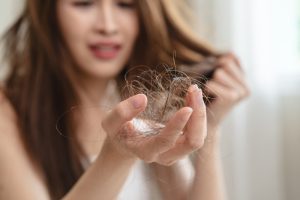 Some people notice seasonal changes in hair shedding, and temporary shedding can resolve on its own. However, diffuse shedding can have several causes, so don’t assume it’s seasonal just because it starts in the fall. If shedding is pronounced, persistent, or accompanied by visible thinning, consider a medical evaluation.
Four Clues That Point to Shedding Rather Than Loss
Seasonal or temporary shedding usually looks like this:
- It’s spread evenly. You see more hair falling out, but your scalp doesn’t show new bare patches or a clearly widening part.
- It’s recent. It started within the last few weeks or months, often after a seasonal change.
- The hair has a small white bulb. Hairs shed from the resting phase often have a tiny bulb at the root end.
- It slows down. Over time, the amount in your brush and shower drain returns toward your normal.
Warning Signs It May Be More Than the Season
Hair loss that deserves a closer look often shows up differently:
- A part that keeps getting wider, or a visibly thinner crown
- Receding temples or a hairline that is moving back
- A ponytail that feels noticeably thinner over many months
- Round or oval bald patches
- Scalp redness, scaling, itching, or tenderness
- Shedding that continues for more than about six months
- Hair breaking off rather than falling out from the root
Patterns differ between men and women. Women more commonly notice overall thinning and a widening part, while men more often see a receding hairline or thinning at the crown. Either way, early evaluation tends to give you more options.
Everyday Triggers That Can Throw Your Hair Off Schedule
A fall shedding spike isn’t always only about the season. Several common triggers can push more hairs into the shedding phase, often about two to three months after the trigger happens:
- High stress or a major life change
- Illness, fever, or recent surgery
- Childbirth and postpartum hormone shifts
- Crash dieting or significant weight loss
- Low iron, low vitamin D, or thyroid imbalance
- Perimenopause and menopause
- Certain medications
That delay is why many people don’t connect the shedding to what caused it. If any of these fit your last few months, mention them at your consultation. For more on how hormones can affect your skin and hair, read our post on how hormonal changes affect your skin.
What You Can Do at Home Right Now
 While you figure out what’s going on, a few gentle habits can help:
- Be kind to your hair. Go easy on tight ponytails, high heat, and harsh chemical treatments.
- Eat enough protein and iron-rich foods. Hair is made mostly of protein, and crash diets are a common trigger.
- Manage stress where you can. Sleep, movement, and downtime all matter.
- Check your levels. If your shedding has lasted for a while, lab work can help look for common contributors such as iron, vitamin D, and thyroid function. We offer functional lab tests you can ask about.
- Take photos. A monthly photo of your part and hairline makes it much easier to tell whether things are changing.
In-Office Hair Restoration Options Near Rochester
Depending on the cause of your hair thinning, your provider may discuss cosmetic hair-restoration options available at Front Door Medspa®. The evidence, potential benefits, and limitations differ by treatment, and no option is right for everyone. Your provider should explain what is known about each approach before you decide whether to proceed.
- Vampire Hair Regeneration®, which uses platelet-rich plasma (PRP) from your own blood to support follicles
- Exosomes for hair loss
- KeraLase®
- Laser therapy for hair loss
- Hair restoration for women
Which option fits depends on the pattern and cause of your hair loss, your goals, and your medical history. Treatment generally involves a series of visits rather than a one-time fix, and results vary from person to person. Your provider will walk you through what to realistically expect.
Want to know how PRP works? Our guide to answering your top PRP questions is a good place to start. You can also browse hair regeneration before-and-after photos.
Questions We Hear Most From Patients
Is it normal to lose more hair in the fall?
A temporary increase in shedding is common as seasons change. If it settles within a few months, it’s usually nothing to worry about.
How do I know if it’s hair loss?
Seek an evaluation if shedding continues, your hair density is visibly decreasing, or you notice a widening part or receding hairline. Sudden bald patches, scalp pain, significant redness, or scaling warrant prompt medical assessment rather than waiting to see whether the problem resolves.
Can stress cause hair shedding?
Yes. Significant stress, illness, and big life changes are well-known triggers for temporary shedding, which often shows up a couple of months later.
Do hair treatments work for men and women?
Our hair restoration options are available for both. The best approach depends on the cause of the thinning, which we assess at your consultation.
Serving Rochester, Rochester Hills, Auburn Hills, Troy, and Beyond
Front Door Medspa® welcomes patients from Rochester, Rochester Hills, Macomb, Troy, Shelby Township, Oakland Township, and the surrounding communities. Whether you visit our downtown Rochester flagship or our West Rochester/Oakland Township location, our team will start by listening to your concerns and looking at the full picture.
Don’t Wait Until Winter to Find Out What Your Hair Is Telling You
If your shedding continues or you notice changes in your hair density, getting the right evaluation can help you understand what’s happening and decide on appropriate next steps. You don’t have to guess at the cause or choose a treatment without understanding your options.
Call our Rochester medical spa at 248-237-8772 to learn more about our hair restoration treatments and to schedule your consultation today.